Archives
- 2026-09
- 2026-08
- 2026-07
- 2026-06
- 2026-05
- 2026-04
- 2026-03
- 2026-02
- 2026-01
- 2025-12
- 2025-11
- 2025-10
- 2025-09
- 2025-03
- 2025-02
- 2025-01
- 2024-12
- 2024-11
- 2024-10
- 2024-09
- 2024-08
- 2024-07
- 2024-06
- 2024-05
- 2024-04
- 2024-03
- 2024-02
- 2024-01
- 2023-12
- 2023-11
- 2023-10
- 2023-09
- 2023-08
- 2023-06
- 2023-05
- 2023-04
- 2023-03
- 2023-02
- 2023-01
- 2022-12
- 2022-11
- 2022-10
- 2022-09
- 2022-08
- 2022-07
- 2022-06
- 2022-05
- 2022-04
- 2022-03
- 2022-02
- 2022-01
-
Histochemical analyses using antibody or cDNA
2023-10-12
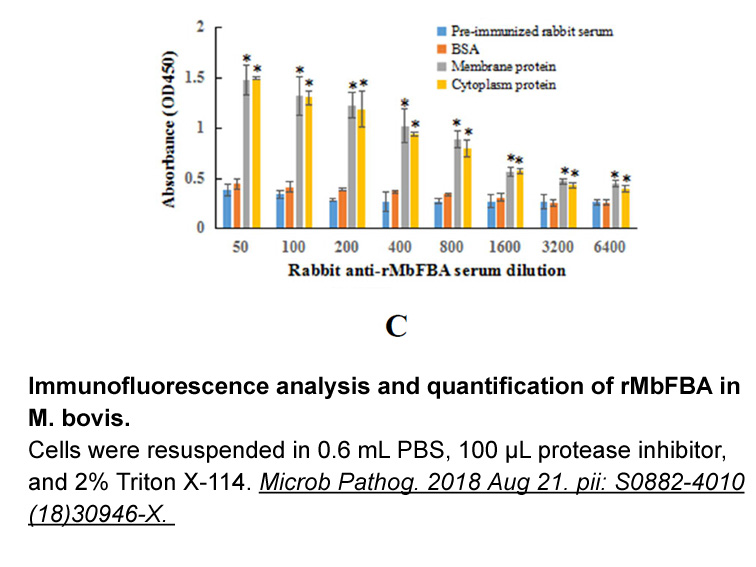
Histochemical analyses using antibody or cDNA probes reveal the precise cellular location of the 12S-lipoxygenases in tissues of interest. An immunohistochemical study in various rat tissues showed specific expression of the leukocyte-type 12S-lipoxygenase in macrophages in lung and spleen [27]. In
-
br Conclusion br Introduction The identification
2023-10-12
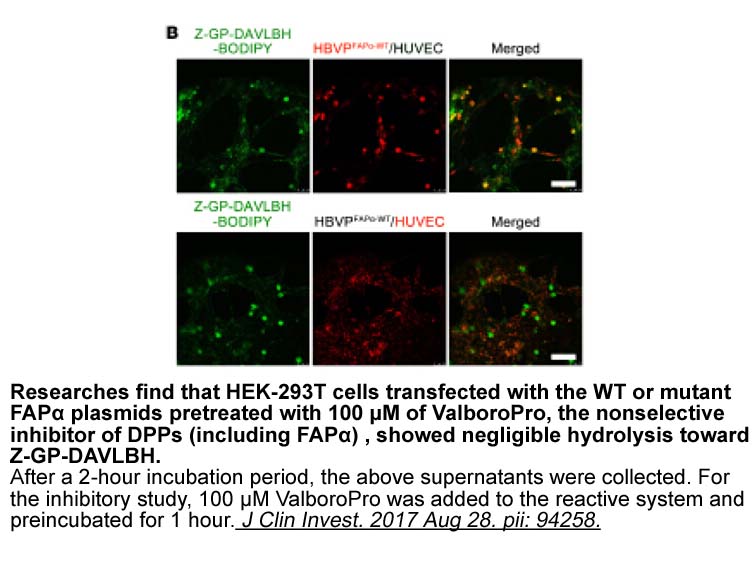
Conclusion Introduction The identification of Alzheimer's disease (AD) biomarkers and their ability to measure pathology antemortem has led to a fundamental reconsideration of the pathogenesis of AD. The importance of biomarkers was already reflected in revised diagnostic criteria proposed by
-
APN accounts for of total
2023-10-12
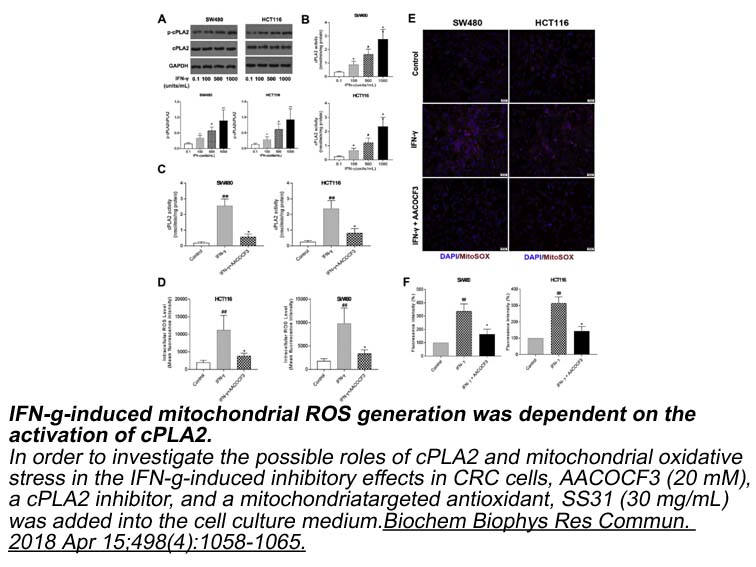
APN accounts for 0.01% of total plasma proteins in humans; this proportion increases with age to a small extent (Barb et al., 2007). Normal APN levels in the circulation range 3–30μg/mL (Aprahamian and Sam, 2011). APN levels are lower in men than women due to the presence of testosterone and even mo
-
Whether similar mechanisms play a role in adiponectin
2023-10-12
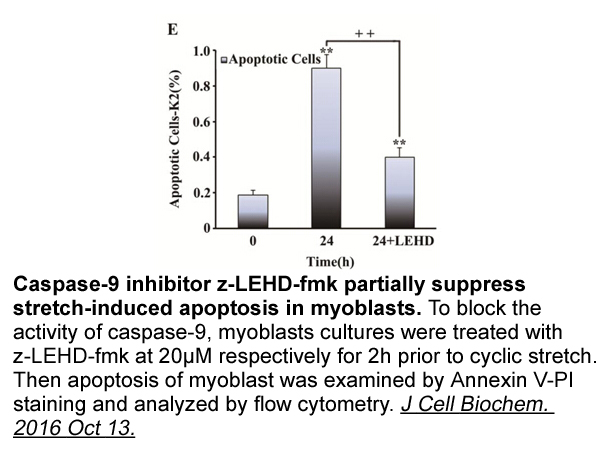
Whether similar mechanisms play a role in adiponectin signal transduction and whether additional proteins are recruited to adiponectin receptors via APPL1 has not been analysed so far. Although it has been clearly established that APPL1 is a downstream adaptor protein in adiponectin signal transduct
-
Qualitative inspection of the single channel traces presente
2023-10-12

Qualitative inspection of the single-channel traces presented in both Figures 3 and 4 shows that within bursts of activity, βAnc-containing AChRs display a marked reduction in open probability. To quantify these differences in single-channel behavior, we performed dwell-time analysis under high-reso
-
br Leptin Adiponectin a permissive imbalance
2023-10-11
Leptin/Adiponectin: a permissive imbalance Leptin, a satiety hormone, is encoded by the obesity (ob) gene. It essentially functions as an energy sensor which is involved in the regulation of body weight by sending signals to the Zebularine to reduce appetite (Woods and D'Alessio, 2008). Obesity
-
Several MAP kinases are involved in the signal
2023-10-11
Several MAP kinases are involved in the signal transduction pathways that lead to the upregulations of inflammatory mediators. Moreover, transcriptional activations of STATs are regulated by MAP kinases, as evidenced by reports that p38 MAPK is necessary for the S727 phosphorylation of STATs (Kovari
-
Apelin is a bioactive peptide and endogenous ligand for
2023-10-11

Apelin is a bioactive peptide and endogenous ligand for the APJ receptor (APLNR), a member of the G protein coupled receptor family that shares a similar sequence as the angiotensin type-1 receptor (AT1) [5]. Early studies demonstrated that the apelin/APLNR receptor axis plays a significant role in
-
The sequential behavioral approach used in the present
2023-10-11
The sequential behavioral approach used in the present study reinforced the involvement of the BDNF/TRKB system in the effect of losartan. In mice with dampened BDNF expression, losartan was no longer able to exert antidepressant-like effects. Similar to what was observed after losartan treatment, t
-
Despite clear evidence of a causative role for A in
2023-10-11
Despite clear evidence of a causative role for Aβ in AD, Aβ-mediated toxicity alone is insufficient to explain all facets of fully manifested AD. Indeed, a recent report found that two familial AD mutations in PSEN1, PSEN-L435F and PSEN-C410Y, resulted in a dysfunctional protein that does not cleave
-
br Discussion Hepatic dysfunction in the
2023-10-11
Discussion Hepatic dysfunction in the metabolic syndrome is a driver of negative patient outcomes that requires more therapeutic options. The complexity of liver alterations in this disease – elevated de novo synthesis of fatty acids and cholesterol, reduced clearance of circulating atherogenic L
-
To elucidate this relationship we
2023-10-11
To elucidate this relationship, we developed a spatial model of Ca-influx through N-methyl-D-aspartate receptor (NMDAR), CaMKII/PP1 activation, and AMPAR insertion in a realistic spine geometry. Using this model, we show that i) variables in membrane voltage mediated Ca-influx, particularly the numb
-
EDTA At the top of the S subsite cylinder are two
2023-10-11
At the top of the S1 subsite cylinder are two “cap” residues: E572 and M1034 [13]. Atomic structures of PfA-M1 have revealed important clues into potential roles for the cap residues in substrate selection. In the PfA-M1:bestatin co-crystal structure ([13]; Fig. 1), the P1 phenyl ring occupies the S
-
Accumulating evidence suggest that patients with advanced po
2023-10-11
Accumulating evidence suggest that patients with advanced -positive NSCLC are at increased risk of VTE or coagulation disorders during the course of their disease, indicating that cancer genotype might play a role in the occurrence of cancer-related thromboembolism . Here we report the case of a pa
-
Free Fatty Acid Quantification Colorimetric/Fluorometric Kit
2023-10-11

Considering our previous results with cfDNA in EGFR TKI-resistant NSCLC patients and growing evidence about different mutations in the ALK kinase domain as responsible for acquired resistance to ALK TKIs, we planned this study. Even if a next-generation sequencing approach after PD during crizotini
8313 records 296/555 page Previous Next First page 上5页 296297298299300 下5页 Last page